A Natural Way to Reduce an Enlarged Prostate Without Surgery
6/16/20262 min read
You know the feeling.
You finally fall asleep, then your bladder wakes you up again. And again. Before long, you're planning road trips around rest stops and quietly checking where the nearest bathroom is every time you leave home.
What makes it harder is how personal it feels.
An enlarged prostate doesn't just interrupt your sleep. It chips away at your confidence. It can make intimacy feel uncertain. It can leave you wondering whether this is simply what getting older looks like.
The good news is that your body isn't necessarily working against you.
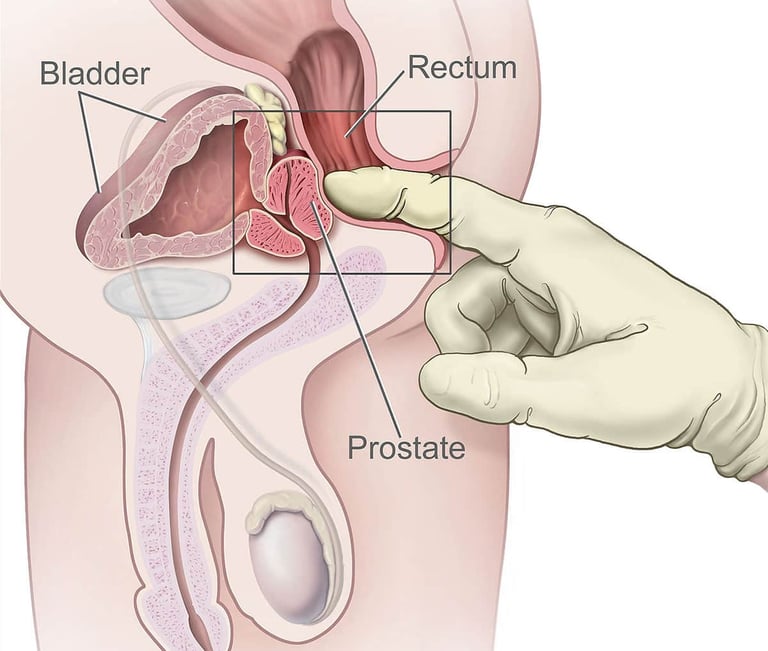
An enlarged prostate, often called BPH, happens when the prostate gland grows and begins pressing against the urethra. Think of it like stepping on a garden hose. The bladder still wants to empty, but the pathway narrows. That creates weaker flow, frequent urges, dribbling, and the feeling that you never completely finished.
What surprises many men is that the prostate itself is not always the whole story.
Over time, the bladder changes too. When it spends years pushing against resistance, its muscles can become overactive. That's one reason bathroom trips sometimes continue even when a man focuses only on the prostate.
This matters because a lot of common advice targets symptoms rather than understanding why those symptoms persist.
You've probably heard about avoiding caffeine late in the day. That can help. Reducing evening fluids can help too. Carrying extra weight around the midsection may worsen urinary symptoms, so gradual weight loss often makes a difference.
But here's where things get interesting.
A man can do all the "right" things and still find himself staring at the ceiling at 3 a.m., waiting for sleep to return after another bathroom trip.
The reason is that prostate health involves more than simple enlargement. Hormonal changes, inflammation, circulation, metabolic health, and bladder function all interact with each other. When one piece shifts, the others often follow.
That's why two men with similarly sized prostates can have completely different symptoms.
One barely notices a problem.
The other can't sit through a movie without finding the aisle seat.
The real issue is often not how large the prostate becomes, but why the tissues and surrounding systems keep creating pressure in the first place.
That distinction changes how you think about the problem.
Instead of asking, "How do I stop these bathroom trips?" you begin asking, "What is driving them?"
That question opens the door to options many men never discuss.
It also explains why some men see meaningful improvements through lifestyle changes while others feel stuck despite trying everything they read online.
If your symptoms are getting worse, don't ignore them. Frequent urination, weak flow, urgency, or leakage deserve attention. In some cases, similar symptoms can overlap with infections, bladder issues, or more serious prostate concerns that need proper evaluation.
Understanding what's happening inside your body gives you something valuable back: a sense of control.
And when you understand the mechanisms behind the symptoms, your choices become clearer.
After going through this myself, I put together a short free video that goes deeper into exactly this.
You may be skeptical, especially if you've already tried advice that promised more than it delivered. In the video, I walk through the underlying factors that many men never hear about and why focusing only on symptoms can leave you frustrated.
One more thing is worth remembering. When urinary symptoms continue unchecked, they can affect sleep, bladder function, and sexual health over time. Understanding what is driving them sooner rather than later simply gives you more options.
HealthyProstateHub.com
Pages
legal
This website contains affiliate links. If you make a purchase through one of these links, I may receive a small commission at no additional cost to you. The experiences shared on this site are personal and individual. Results are not guaranteed and can vary from person to person. All content is provided for informational purposes only and should not be considered medical advice. Always speak with a qualified healthcare professional before beginning any new health protocol or supplement.
© 2024. All rights reserved.