A Practical Way to Reduce an Enlarged Prostate Naturally
6/21/20263 min read
You’re tired of checking where the nearest bathroom is.
You’re tired of waking up at 2 a.m., then 4 a.m., then staring at the ceiling because sleep never really returns.
What makes it harder is that nobody talks about it. The urgency. The dribbling. The way it quietly chips away at confidence. You start planning your life around your bladder without even realizing it.
If that sounds familiar, the first thing to know is this: an enlarged prostate rarely happens overnight.
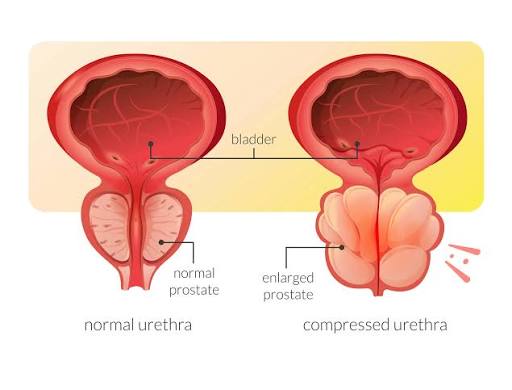
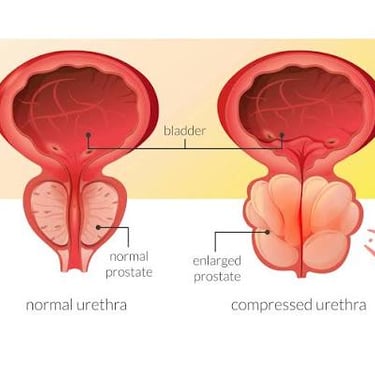
It develops gradually. The prostate sits just below your bladder and wraps around the urethra like a collar. As it grows, it can squeeze that passageway. Urine flow slows. The bladder works harder. Eventually, even a small amount of urine can trigger the feeling that you need to go again.
That’s why simply drinking less water often backfires.
Many men cut fluids in hopes of fewer bathroom trips. Then the urine becomes more concentrated and irritates the bladder even more. The urge can actually feel stronger.
A better starting point is understanding what makes symptoms worse.
Excess body fat, poor sleep, chronic inflammation, and blood sugar problems all seem to influence prostate health. The prostate does not exist in isolation. It responds to what is happening throughout the body.
You may have noticed something interesting yourself.
After a heavy evening meal, several drinks, or a night of poor sleep, symptoms often feel worse the next day. That is not your imagination. The bladder and prostate are sensitive to changes in inflammation, hormones, and fluid balance.
One man I spoke with had spent years focusing only on bathroom symptoms. He tried every trick he could find. What finally made a difference was addressing the habits driving inflammation in the first place. The improvements came slowly, but they lasted longer than any temporary workaround.
This is why movement matters.
You do not need extreme workouts. Regular walking improves circulation, supports blood sugar control, and may help reduce some of the factors associated with prostate enlargement. Even thirty minutes most days can add up over time.
Sleep matters too.
Your body does much of its repair work while you sleep. Yet prostate symptoms often steal that sleep away. It becomes a frustrating cycle. Poor sleep worsens inflammation, and inflammation may worsen symptoms.
Most advice stops there.
Eat better. Move more. Sleep more.
Useful advice, but incomplete.
The biggest mistake is treating the bathroom trips as the problem when they may only be the signal that something deeper is happening inside the body.
That shift changes everything.
Instead of asking, “How do I stop running to the bathroom?” you begin asking, “What is causing my prostate and bladder to stay irritated in the first place?”
Those are very different questions.
And when you start looking deeper, you discover why some men do all the “right” things and still struggle. The underlying drivers can vary from person to person. Hormonal changes, inflammation, circulation issues, and metabolic health can all play a role.
Understanding that connection often brings relief.
Not because the problem disappears instantly.
Because you finally stop feeling like your body is randomly betraying you.
You start seeing patterns. You start understanding why certain days are worse than others. And once you understand the pattern, you have something far more useful than another quick tip.
You have a direction.
I know you may be skeptical. Most men are after hearing the same advice over and over.
After going through this myself, I put together a short free video that goes deeper into exactly this and explains the underlying factors many men never hear about when discussing prostate enlargement.
If symptoms continue to worsen, they can affect sleep, bladder function, and sexual health over time. Understanding what may be driving them sooner gives you more options, not fewer.
HealthyProstateHub.com
Pages
legal
This website contains affiliate links. If you make a purchase through one of these links, I may receive a small commission at no additional cost to you. The experiences shared on this site are personal and individual. Results are not guaranteed and can vary from person to person. All content is provided for informational purposes only and should not be considered medical advice. Always speak with a qualified healthcare professional before beginning any new health protocol or supplement.
© 2024. All rights reserved.